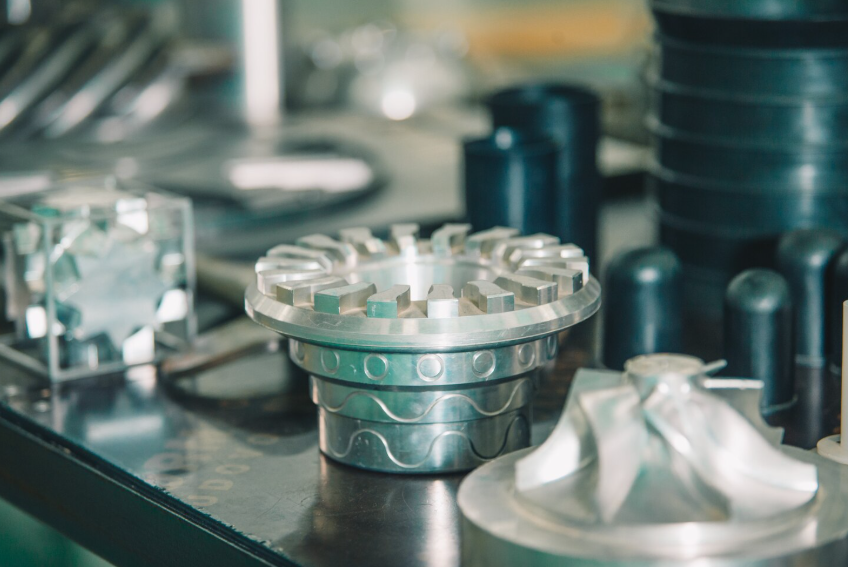
Discover when to move from CNC machining to injection molding for your parts. Learn the key factors—cost, volume, design, and material—to ensure a smooth scale-up from prototype to mass production with CFY Technology Co., Ltd.
Introduction: From Prototype to Production
Every successful product starts small — a prototype, a few test runs, an early batch for validation.
At this stage, CNC machining is often the preferred choice because it offers flexibility, speed, and precision with minimal upfront tooling costs.
But as demand grows, so does the question:
When is it time to move from CNC machining to injection molding?
For manufacturers like CFY Technology Co., Ltd., which specializes in both processes, helping clients navigate this transition is part of ensuring efficient, scalable, and cost-effective production.
1. Understanding the Strengths of Each Process
CNC Machining:
- Ideal for low-volume or highly customized parts.
- No mold investment; rapid design changes possible.
- Exceptional dimensional accuracy and surface finish.
- Works with metals and engineering plastics.
Injection Molding:
- Best for large-volume production with consistent quality.
- High upfront tooling cost but low cost per unit afterward.
- Suitable for complex geometries, color consistency, and rapid cycles.
- Offers advanced techniques like dual injection, micro-injection, and precision molding — all available at CFY.
Understanding these trade-offs is the first step toward identifying the right time to scale.
2. Production Volume: The Most Common Decision Point
A general rule of thumb:
- CNC machining is cost-effective up to 100–500 parts, depending on part size and material.
- Injection molding becomes advantageous for hundreds to thousands of parts or when repeat orders are expected.
Once tooling costs are amortized over higher volumes, injection molding delivers far lower cost per part.
At CFY, clients often begin with CNC prototypes and switch to molding when design validation is complete and production forecasts stabilize.
3. Part Design and Geometry
Some designs are easy to machine but challenging to mold — and vice versa.
CNC-friendly features:
- Deep pockets or undercuts that would require complex mold actions.
- Thick sections or sharp corners that are not optimal for plastic flow.
Molding-friendly features:
- Uniform wall thickness (for even cooling and dimensional stability).
- Proper draft angles for easy demolding.
- Rounded transitions for material flow.
When transitioning, CFY’s engineering team assists customers in design-for- manufacturing (DFM) adjustments — ensuring the part meets both mechanical performance and molding feasibility.
4. Material Considerations
If your prototype uses machined plastic, such as POM or ABS, the transition to molded versions of the same material is often smooth.
However, slight variations can occur in:
- Shrinkage and tolerance control
- Surface texture
- Mechanical performance (due to molding orientation and cooling rate)
CFY’s material specialists help match CNC-grade resins with injection-grade equivalents and validate results with trial runs before mass production.
For metal-to-plastic transitions — for example, replacing a machined aluminum component with a molded composite — CFY also provides hybrid manufacturing solutions (metal inserts + overmolded plastics) for optimized performance.
5. Cost and Lead Time Comparison
| Parameter | CNC Machining | Injection Molding |
| Setup Time | Low | High (requires mold fabrication) |
| Per-Part Cost | Higher | Much lower at volume |
| Design Change Flexibility | High | Limited after tooling |
| Material Range | Metals and plastics | Mostly plastics |
| Typical Lead Time | Days to weeks | Weeks for mold + seconds per cycle |
If your project requires design flexibility or engineering validation, CNC machining is the smarter short-term option.
When your product design is finalized and production targets are in the thousands, injection molding becomes the clear winner.
6. The Transition Process: How CFY Simplifies It
At CFY Technology, we often help clients move smoothly from one process to the other with minimal disruption.
Here’s how a typical transition looks:
1. Prototype Stage:
CNC machining for design validation, tolerance checks, and functional testing.
2. Pilot Stage:
Low-volume trial molds or soft tooling to evaluate molding feasibility.
3. Mass Production:
Full-scale precision injection molding using hardened steel tools, optimized for cycle time and quality.
Our in-house capability in CNC machining, mold design, injection molding, and precision inspection allows for complete support — from early prototypes to large-scale manufacturing — under one roof.
7. Signs It’s Time to Transition
You should consider switching from CNC machining to injection molding when:
- Per-unit cost begins to exceed your target margin.
- Part design is stable and unlikely to change frequently.
- You need consistent aesthetics, tight repeatability, or color control.
- Market demand has grown beyond pilot quantities.
If you recognize any of these signs, it’s time to discuss scaling options with your manufacturer
8. Partnering with CFY for a Seamless Scale-Up
CFY Technology Co., Ltd. is uniquely positioned to guide clients through every stage of production — from machined prototypes to mass-produced molded parts. With deep expertise in precision CNC machining, injection molding, and hybrid processes, our team ensures each transition maintains:
- Dimensional accuracy
- Cost efficiency
- Consistent quality
Whether you’re a startup refining your first prototype or an established OEM scaling up for global production, CFY provides the engineering partnership and technical precision to bring your design to market efficiently.