
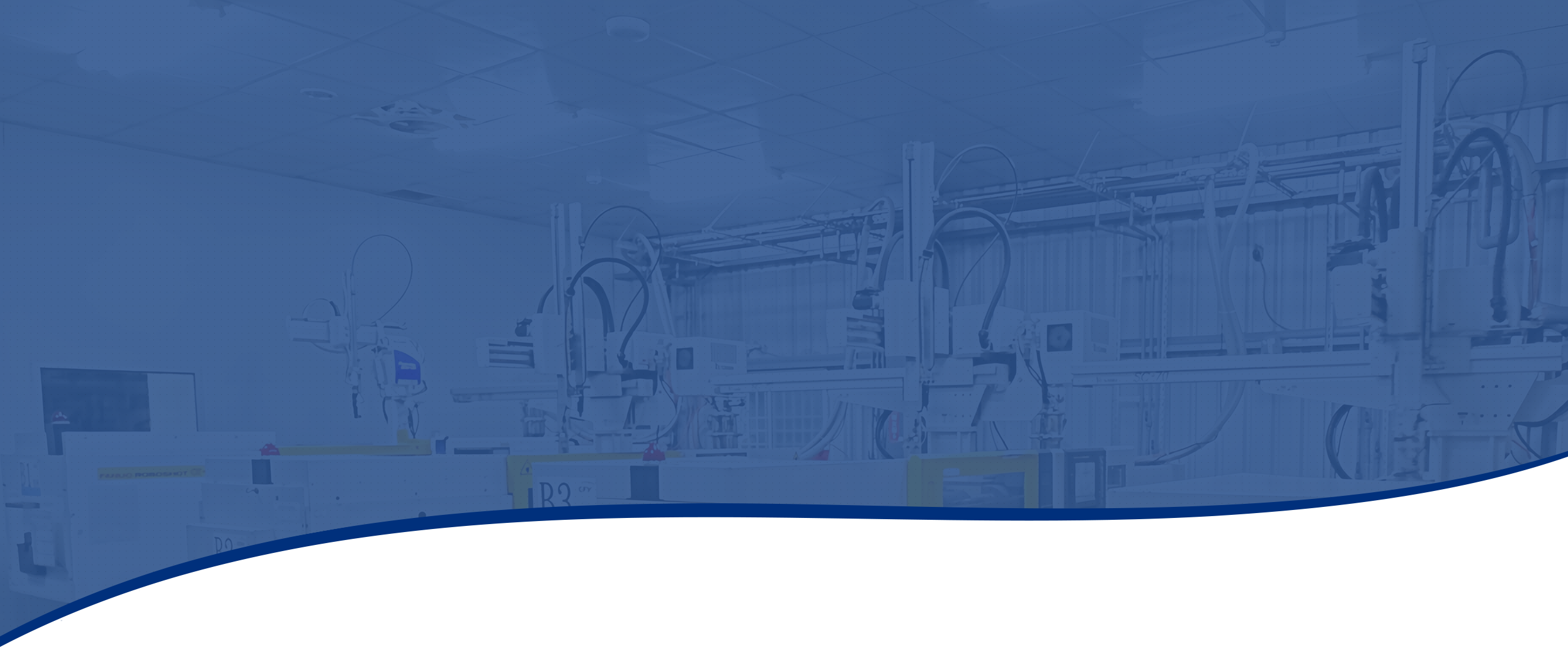
Injection molding refers to the process of heating plastic pellets to a molten state and then injecting them into a mold under high pressure. After cooling and solidifying, the product takes the desired shape. Due to its high efficiency, precision, and ability to produce large quantities, injection molding technology is widely used in the production of various plastic products, including mobile phone housings, automotive parts, optical components, household containers, and more.
Injection molding technology is extensively applied in fields such as electronic components, optical components, automotive parts, and medical devices. Among these, housings are one of the most common applications. While housings may seem simple, they are an indispensable and critical component.
- Feature - Excellent Impact Resistance
Many precision components are highly sensitive to impact and can easily be damaged. As products become more refined, the demand for protective housings has become increasingly important. Housings not only effectively protect internal components from external impacts but also extend the product's lifespan, ensuring its stability and functionality. - Feature - Aesthetic Appeal
Plastic housings can undergo various surface treatments such as painting, printing, and electroplating, enhancing their aesthetic appeal and meeting the design requirements of different products. - Feature - Cost-Effectiveness
Plastic materials are relatively low-cost, and the production process allows for mass manufacturing, making plastic housings more economical compared to metal or glass materials. This is especially advantageous for large-scale production. - Common Materials for Housings
ABS (Acrylonitrile-Butadiene-Styrene Copolymer)
Features: Impact-resistant, heat-resistant, easy to mold, smooth surface, and the ability to adjust the ratio of acrylonitrile, butadiene, and styrene, resulting in products with varying chemical properties. Common applications: Electronic products, home appliances, toys, etc.
PC (Polycarbonate)
Features: Colorless material, high strength, high transparency, excellent impact resistance, high temperature resistance, and dimensional stability. Compared to other transparent materials, it offers higher durability and is recyclable, helping reduce environmental impact.
Common applications: Electronic device housings, lenses, optical products, etc.
PP (Polypropylene)
A semi-crystalline thermoplastic material that is lightweight, with low density, high chemical stability, good heat resistance, excellent insulating properties, high toughness, and impact resistance. It also has a certain degree of transparency and is widely used in everyday products and automotive parts.
PC/ABS alloy
As mentioned earlier, ABS is widely favored for its excellent processing characteristics and impact resistance. However, it has some limitations in scratch resistance. On the other hand, PC offers higher surface hardness but is somewhat lacking in appearance processing. By combining ABS and PC, a material that provides the advantages of both can be created, offering better processing performance and surface hardness. This results in a versatile plastic material with enhanced overall properties, widely used in applications that require high strength, impact resistance, heat resistance, and an aesthetically pleasing appearance.
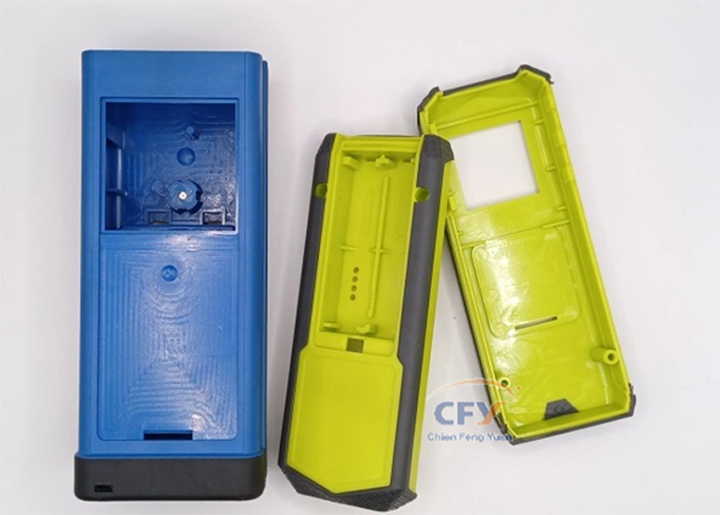
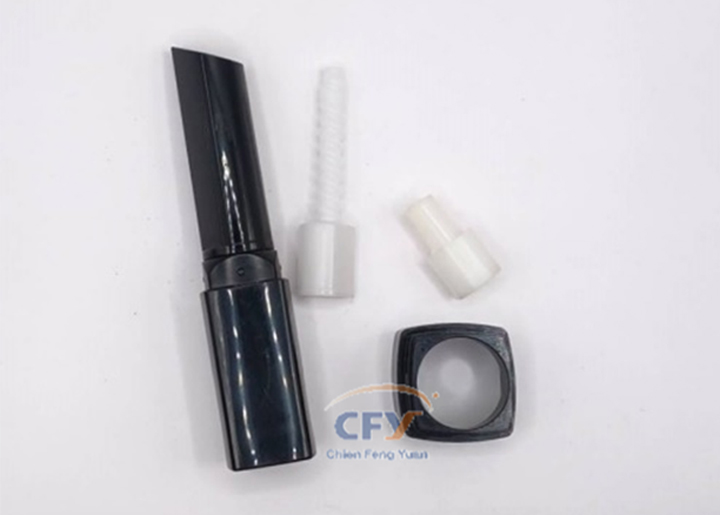
At Chien Feng Yuan, the housings for our products such as laser distance meters, thermometers, and lipsticks are made from ABS+PC materials. In addition to ABS+PC, we can also offer other material options based on customer requirements, such as PP, PMMA, and more. Whether for mass production or custom needs, we are committed to providing high-quality solutions.
We welcome inquiries from all industries and look forward to collaborating with you to provide tailored product housing materials!


