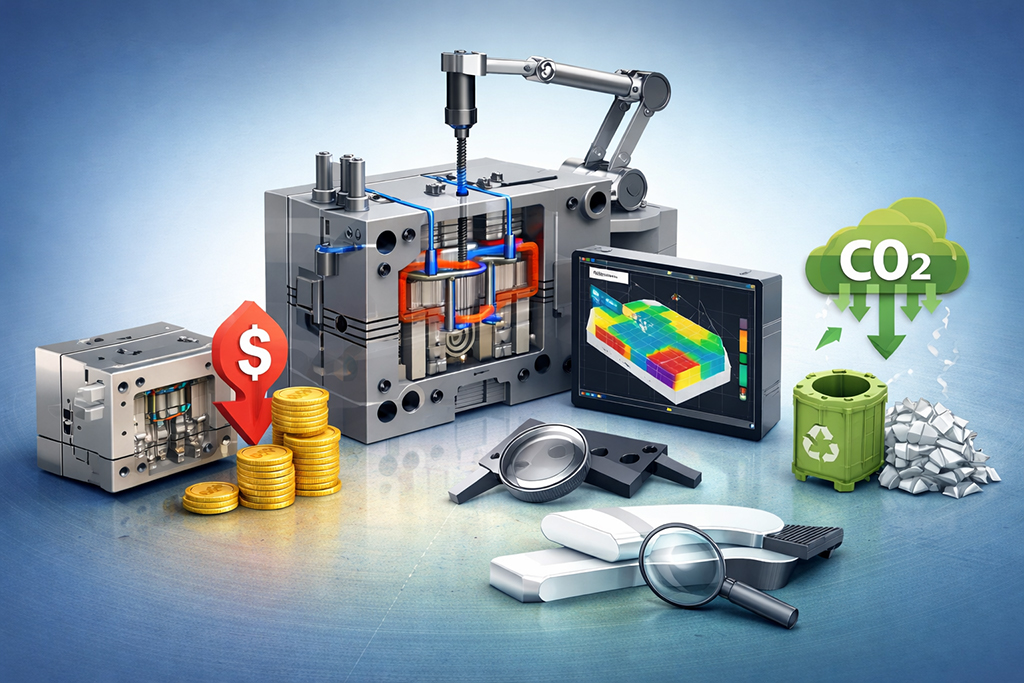
In injection molding, many people focus on material selection, machine capability, or cycle time optimization. However, one critical factor often underestimated is mold design.
A well-designed mold does far more than shape a part—it directly determines manufacturing cost, product quality, and environmental impact throughout the product lifecycle.
This article explores how mold design choices influence these three key areas and why investing in proper mold engineering early on delivers long-term value.
1. Mold Design and Manufacturing Cost
1.1 Tooling Cost vs. Lifecycle Cost
Initial mold cost is often a primary concern for buyers. However, focusing only on upfront tooling price can be misleading.
Key mold design elements that affect cost over time include:
- Number of cavities
- Runner system (cold vs. hot runner)
- Cooling layout
- Mold material and durability
A lower-cost mold may save money initially but result in:
- Longer cycle times
- Higher scrap rates
- Frequent maintenance or early mold failure
In contrast, a well-engineered mold typically offers lower cost per part over the full production run.
1.2 Cycle Time Optimization
Mold design directly impacts cycle time through:
- Efficient cooling channel placement
- Balanced cavity filling
- Optimized gate locations
Even a 1–2 second reduction per cycle can result in significant savings in large-volume production. Faster cycles mean:
- Lower energy consumption
- Higher output per machine
- Reduced labor and overhead costs
1.3 Material Waste Reduction
Poor mold design can cause:
- Short shots
- Flash
- Warpage
- Excessive runner waste
Optimized mold flow and runner systems reduce material loss, helping manufacturers control both material costs and waste disposal expenses.
2. Mold Design and Product Quality
2.1 Dimensional Accuracy and Consistency
Precision mold design ensures:
- Uniform filling across cavities
- Controlled shrinkage
- Stable part dimensions
Unbalanced flow paths or improper venting often lead to inconsistent parts, making downstream assembly difficult and increasing rejection rates.
2.2 Surface Finish and Aesthetic Quality
Surface quality is not just about polishing—it starts with mold design:
- Gate placement affects flow marks
- Venting prevents burn marks
- Mold surface treatment influences final appearance
For applications such as automotive interiors, medical devices, or cosmetic packaging, mold design plays a critical role in meeting visual and tactile requirements.
2.3 Defect Prevention at the Design Stage
Many common injection molding defects originate from mold design issues rather than processing parameters, including:
- Weld lines
- Sink marks
- Air traps
- Warpage
Addressing these risks early through proper mold design and simulation significantly improves first-pass yield.
3. Mold Design and Carbon Footprint
3.1 Energy Consumption per Part
Mold design influences:
- Cooling efficiency
- Required clamp force
- Cycle time
Shorter cycles and stable processing conditions reduce machine run time, which directly lowers electricity consumption per part.
3.2 Material Efficiency and Sustainability
Material waste contributes to both cost and carbon emissions. Well-designed molds:
- Minimize runner volume
- Improve part yield
- Enable efficient use of recycled or bio-based materials
Reducing scrap means fewer raw materials are consumed and less waste enters the recycling or disposal stream.
3.3 Mold Longevity and Resource Use
Durable mold design reduces:
- Frequent tool repairs
- Early mold replacement
- Additional steel and machining resources
Longer mold life equals fewer resources consumed over time, supporting more sustainable manufacturing practices.
4. The Role of Simulation and Early Engineering Involvement
Modern mold design increasingly relies on:
- Mold flow simulation
- Thermal analysis
- DFM (Design for Manufacturability) reviews
These tools help identify potential issues before steel is cut, reducing:
- Costly design changes
- Trial-and-error sampling
- Unnecessary material and energy use
Early collaboration between product designers, mold engineers, and manufacturers is key to achieving optimal results.
Conclusion: Mold Design Is a Strategic Investment
Mold design is not just a technical step—it is a strategic decision that affects cost efficiency, product quality, and environmental impact throughout production.
By investing in thoughtful mold engineering, manufacturers can achieve:
- Lower total cost of ownership
- Higher and more consistent product quality
- Reduced carbon footprint and waste
In today’s competitive and sustainability-driven manufacturing landscape, smart mold design is no longer optional, it is essential.